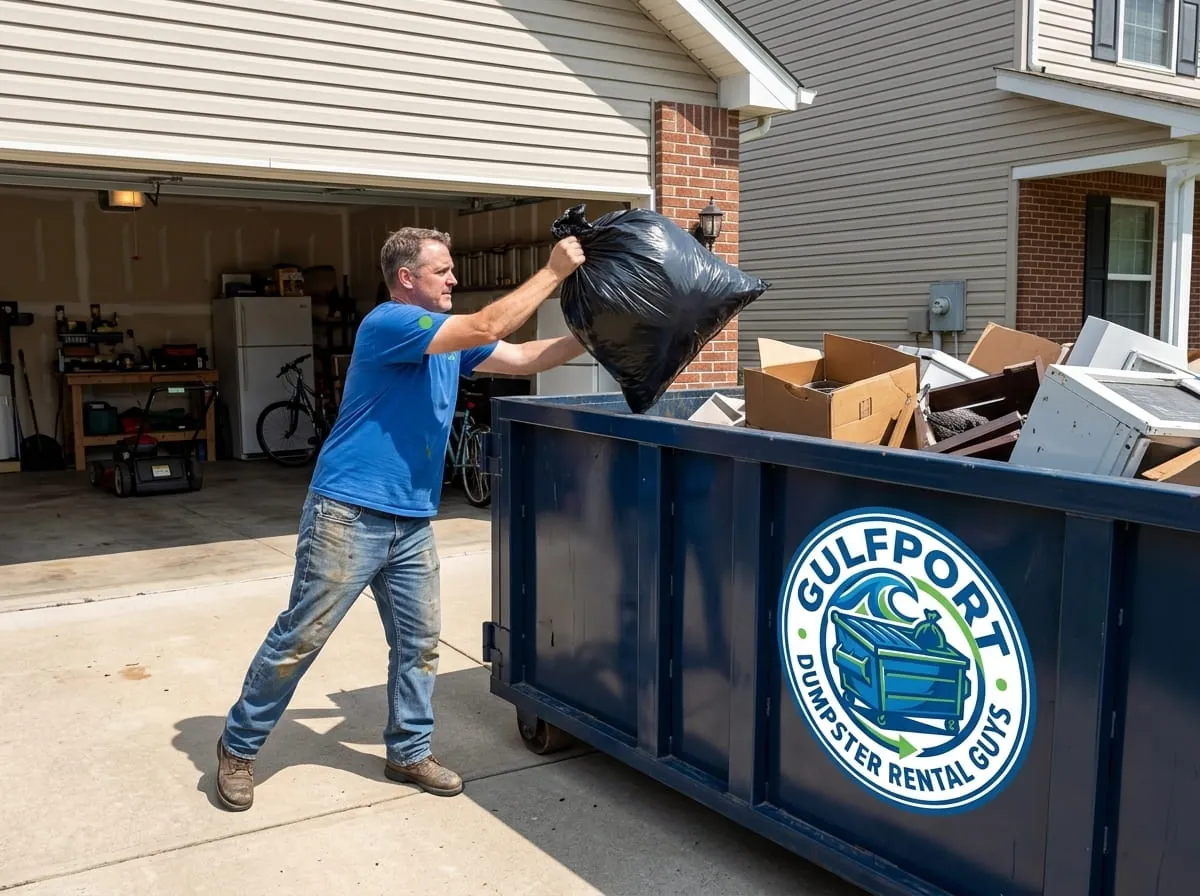
One of the first questions we get from folks along the Mississippi Gulf Coast is simple: "Can I just throw everything in the dumpster?" The honest answer is almost, but not quite. A roll-off dumpster handles the overwhelming majority of what comes out of a house, a job site, or a storm cleanup. There's a short but important list of items that are prohibited, and every one of them is off-limits for a real reason: safety, state law, or landfill rules.
We put this guide together so you don't have to guess. Load with confidence, avoid overage fees or rejected loads, and keep your project moving. If you'd rather just ask a person, call us anytime at (228) 678-7239 and we'll walk you through it.
What Can Go in a Dumpster
The good news first. A standard roll-off is built for the bulky, awkward, heavy stuff that won't fit in your weekly curbside cart. Here's what we happily take.
Household junk and cleanouts
Old furniture, mattresses, box springs, clothing, toys, boxes of who-knows-what from the attic, general clutter from a garage or estate cleanout. If it came out of a home and it isn't on the prohibited list below, it goes in. This is the bread and butter of most rentals, and it's exactly what our junk removal service is designed to clear out fast.
Renovation and construction debris
Drywall, lumber, flooring, cabinetry, countertops, tile, trim, insulation, fixtures, and packaging. Whether you're gutting a single bathroom or framing an addition, a construction dumpster rental keeps the site clean and the crew safe. Non-hazardous building materials are welcome.
Roofing material
Asphalt shingles, felt, and underlayment from a tear-off are fine. Roofing is heavy, so let us know the square footage up front and we'll match you with the right size and weight allowance.
Yard waste
Branches, brush, leaves, shrubs, small stumps, sod, and general landscaping trimmings. After a good pruning weekend, a dumpster beats forty bags at the curb.
Most non-hazardous material
If it's solid, dry, and not chemically dangerous, odds are it belongs in the bin. When you're unsure, ask before you load. It's a lot easier than sorting it back out later.
What Can't Go in a Dumpster
Now the part that trips people up. These items are prohibited or restricted across Mississippi and just about everywhere else, and it isn't arbitrary. Hazardous and regulated materials can't legally go into a standard municipal landfill, they endanger our drivers and landfill workers, and some genuinely catch fire or leak toxins. Here's the list and, more helpfully, where each one should actually go.
Hazardous waste, paint, and chemicals
Wet paint, solvents, motor oil, gasoline, pesticides, herbicides, pool chemicals, and cleaning agents are all off-limits. They contaminate groundwater and can react dangerously in a mixed load. Take these to a Harrison County household hazardous waste collection event or an approved drop-off. Latex paint can often be dried out solid (add kitty litter or a paint hardener) and then, once fully hardened, disposed of with regular trash. Never pour it down a drain.
Tires
Tires are banned from landfills statewide because they trap methane, float to the surface, and breed mosquitoes when they hold water. Most tire shops accept old tires for a small recycling fee.
Batteries
Car batteries, lithium-ion packs, and rechargeables contain corrosive acid and metals, and damaged lithium batteries are a serious fire risk in a packed bin. Auto parts stores take lead-acid batteries, often with a core credit. Many hardware and electronics retailers collect rechargeables.
Refrigerant appliances
Refrigerators, freezers, air conditioners, and dehumidifiers contain refrigerant that must be professionally recovered under federal law before disposal. Many appliance retailers haul off the old unit when they deliver the new one. Ask us and we'll point you to a local option.
Electronics
TVs, monitors, computers, and other e-waste carry lead and other heavy metals and are banned from many landfills. They belong at an e-waste recycler. Our Gulfport recycling and waste disposal guide lists where to take them.
Asbestos
Common in older Gulf Coast homes as pipe wrap, floor tile, and popcorn ceilings, asbestos releases microscopic fibers that cause lung disease. It requires licensed abatement and special disposal. Never bag it up yourself and toss it in the bin.
Medical waste
Sharps, needles, expired medications, and biohazard material need dedicated disposal. Pharmacies frequently offer sharps and medication take-back programs.
The rule of thumb we give every customer: if it can leak, burn, poison, or land you in front of a regulator, it doesn't belong in the dumpster. When in doubt, set it aside and call us at (228) 678-7239 before you load it.
Accepted vs. Not Accepted at a Glance
| Accepted | Not accepted |
|---|---|
| Household junk and furniture | Hazardous waste and chemicals |
| Mattresses and box springs | Wet paint, solvents, motor oil |
| Renovation and construction debris | Tires |
| Roofing shingles and underlayment | Batteries (car and lithium) |
| Yard waste, brush, and branches | Refrigerators, freezers, and AC units |
| Drywall, lumber, and flooring | Electronics and e-waste |
| Cabinets, tile, and fixtures | Asbestos |
| Most solid, dry, non-hazardous material | Medical waste and sharps |
Heavy Material Needs Its Own Bin
Here's a distinction that surprises a lot of first-timers. Concrete, dirt, brick, block, asphalt, gravel, and stone are all accepted, but they can't go in a standard mixed-debris roll-off in large amounts. The reason is weight. A dumpster full of concrete can exceed road and equipment limits long before it looks full, which is dangerous to haul and expensive if it overloads.
For those materials we provide a dedicated concrete and heavy debris bin sized specifically for dense loads. It also keeps that material clean, which means it can often be recycled and crushed for reuse instead of buried. If your demolition mixes heavy and light debris, tell us up front and we'll figure out the right combination so you're not paying overage fees.
A Gulf Coast Note on Storm and Hurricane Debris
Living on the Mississippi Gulf Coast, we all know cleanup season is a fact of life. After a hurricane or a bad storm, roll-offs are one of the fastest ways to clear a property so repairs can start. Most storm debris, fallen limbs, ruined drywall, soaked carpet, damaged furniture, and fencing, is perfectly acceptable.
The catch is that flooding drags the prohibited list right into your yard. Waterlogged refrigerators and freezers, propane and fuel cans, ruined electronics, and displaced chemicals all still need separate handling even in the middle of a cleanup. Keep those items in a separate pile and we'll help you route them correctly. During major events, municipal debris rules can shift temporarily, so it's worth a quick call before you start filling bins.
Still Not Sure? Just Ask
You don't need to memorize this list. That's our job. If you're staring at a pile and wondering whether it's fair game, the fastest answer is a phone call. We'll tell you what fits, recommend a size, and flag anything that needs to go elsewhere so your load isn't rejected on pickup day.
Ready to book, or just have a question about a tricky item? Call Gulfport Dumpster Rental Guys at (228) 678-7239 or reach out through our contact page. We serve Gulfport and the surrounding Gulf Coast, and we're happy to get you loaded the right way the first time.

Founder, Gulfport Dumpster Rental Guys — sharing straight advice from more than 15 years of local hauling experience.
Frequently Asked Questions
Can I put a mattress in a roll-off dumpster?
Yes. Mattresses and box springs are accepted in our roll-off dumpsters. Some landfills charge a small extra fee to handle them, so let us know how many you have and we'll factor it in up front.
Why can't I throw old paint in the dumpster?
Wet paint is a liquid hazardous material that can leak and contaminate a landfill, so it's prohibited. Latex paint can be fully dried out with kitty litter or a paint hardener and then thrown in regular trash once solid. Oil-based paints and solvents should go to a household hazardous waste drop-off.
Where do I take tires, batteries, and electronics instead?
Tire shops accept old tires for a small recycling fee, auto parts stores take car batteries (often with a core credit), and e-waste recyclers handle electronics. Our Gulfport recycling and waste disposal guide lists local drop-off options for each.
Can I put concrete or dirt in a regular dumpster?
Small amounts sometimes, but heavy materials like concrete, brick, dirt, and asphalt are extremely dense and hit weight limits fast. For anything more than a little, we provide a dedicated concrete and heavy debris bin sized for those loads to avoid overage fees.
What do I do with hurricane debris that includes appliances or chemicals?
Most storm debris such as limbs, drywall, carpet, and furniture is accepted in the dumpster. Waterlogged refrigerators, fuel cans, and chemicals still need separate handling even during cleanup. Keep those in a separate pile and call us at (228) 678-7239 and we'll help you route them correctly.